Stop Wasting Engineering Hours on Drive Test Troubleshooting
TDC NET has been ranked as Denmark's best mobile network for the 11th consecutive year. The nationwide benchmarking programme evaluated mobile network performance across stationary and mobile scenarios using thousands of measurement points distributed across Denmark. The study provides a practical example of how large-scale mobile benchmarking can be executed across extensive road networks while maintaining a consistent measurement methodology. The results placed TDC NET ahead of competing operators, marking the 11th consecutive year that the company achieved the top ranking in the nationwide mobile network evaluation.
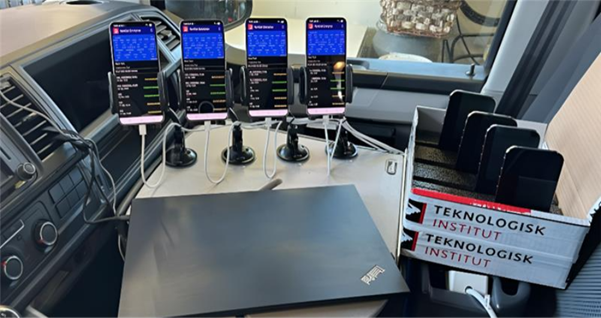
Figure 1: Mobile Measurement Setup Inside the Benchmarking Vehicle
The Challenge: The Cost of High-Volume Drive Testing
For operators, the real challenge is not only collecting measurements, but collecting them consistently, safely, and at scale without tying up skilled RF engineers in repetitive field setup and troubleshooting tasks. Validating seamless 4G and 5G performance across complex transit corridors requires large-scale, high-volume drive testing. Capturing thousands of data points across massive geographic zones—including motorways, cities, and rural areas—traditionally demands extensive engineering hours and complex manual setups that drain operational budgets.
How TDC NET Executed Nationwide Benchmarking
TDC NET, one of Denmark’s leading mobile infrastructure providers, worked with Teknologisk Institut on a nationwide mobile benchmarking study. The mobile measurement workflow used the automatic RantCell app to support structured, traffic-safe, and automated field measurements across Denmark.
The study included:
-
700 stationary measurement locations across Denmark
-
Nearly 16,000 mobile measurement points
-
Testing across motorways, main roads, and municipal roads
-
Download, upload, mobile voice, video streaming, and 5G access testing
-
Multiple network operators included in the benchmarking exercise
3,487 km of motorways
968 km of main roads
Approximately 400 km of municipal connecting roads
The mobile drive testing routes covered:
At this scale, manual drive testing can become slow, expensive, and difficult to manage. The Denmark study shows how automated mobile measurements can help reduce field complexity while still supporting a high-volume national benchmarking programme. Manual testing across this level of coverage can be difficult, time-consuming, and operationally heavy.
Nationwide Drive Testing at Scale
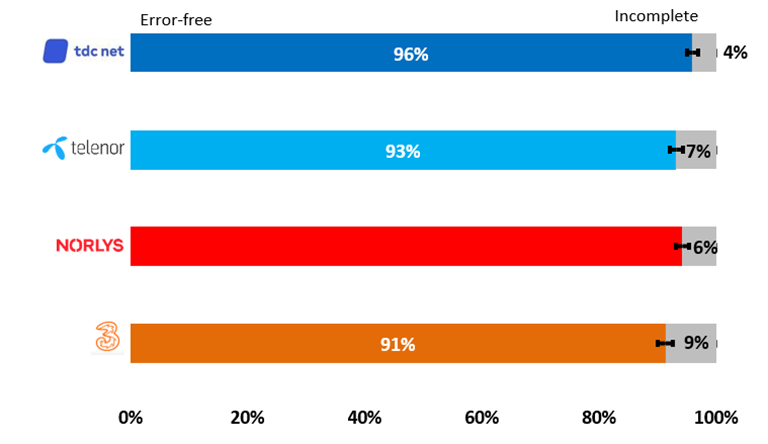
Figure 2: TDC NET defined a good mobile network experience as follows: a 30-second error-free stationary mobile phone call, a 60-second mobile call, a 100 MB download completed within 60 seconds, a 100 MB upload completed within 110 seconds, and 60 seconds of DR TV streaming without buffering or waiting time. The horizontal black lines represent the 95% statistical confidence interval.
The Real Challenge Is Execution at Scale
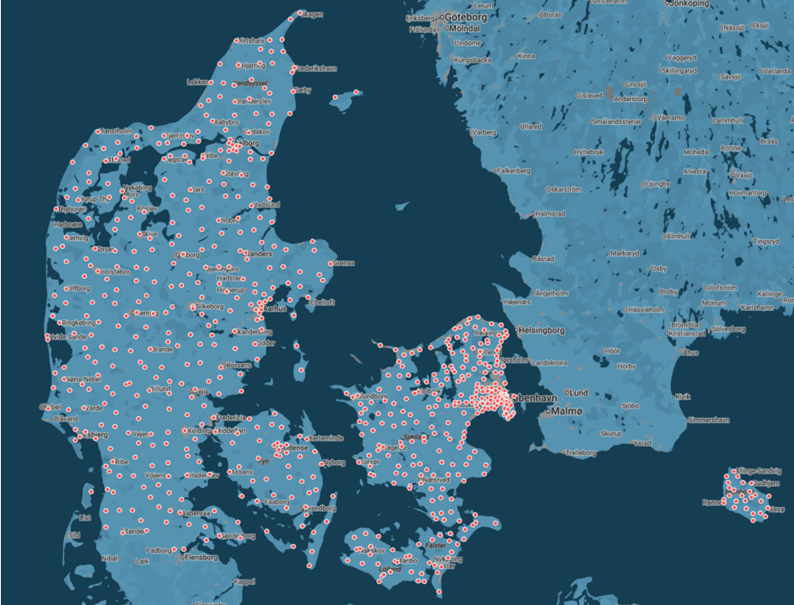
Figure 3: Nationwide Mobile Benchmarking Test Locations Across Denmark
Operators are under constant pressure to improve network quality as 5G adoption, mobile data traffic, and user expectations continue to grow. Network performance must now be validated not only at fixed locations, but also while users are moving between cities, rural areas, highways, and business-critical locations.
Drive testing and benchmarking help operators understand:
-
Where the network is performing well
-
Where users are facing weak experience
-
How performance changes while travelling
-
How strong 5G availability is across road routes
-
Whether download, upload, voice, and video services are reliable
-
How one operator compares against another
What This Means for Future Benchmarking Programmes
The Denmark study demonstrates how nationwide benchmarking can be executed across thousands of measurement points while maintaining a consistent testing methodology. This helps engineering teams spend more time interpreting results and less time managing routine measurement tasks.
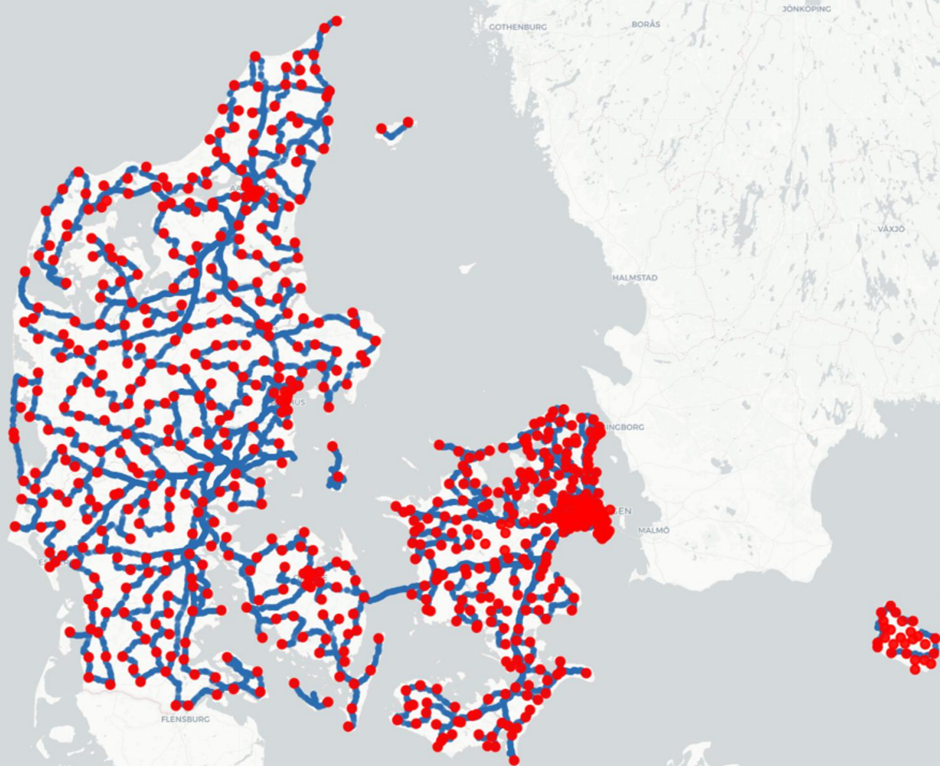
Figure 4: Combined Stationary and Mobile Measurement Points Across Denmark
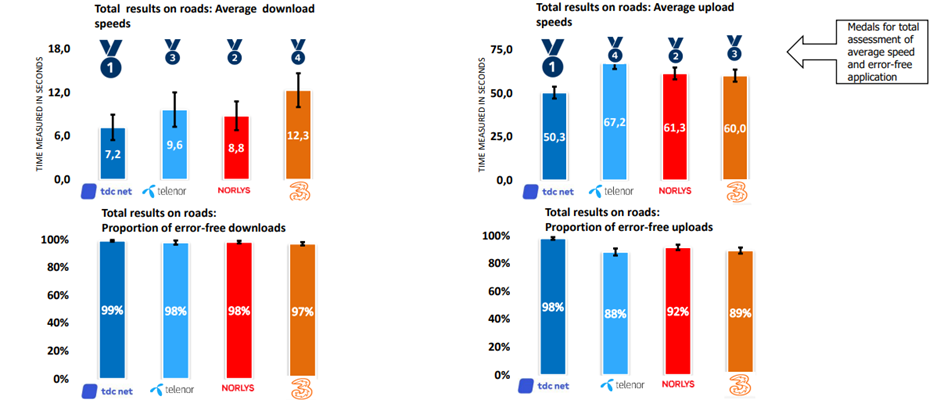
Figure 5: TDC NET defined a good mobile network experience as a 60-second error-free mobile phone conversation, a 100 MB download completed within 60 seconds, a 100 MB upload completed within 110 seconds, and 60 seconds of DR TV streaming without buffering or waiting time. The vertical black lines represent the 95% statistical confidence interval.
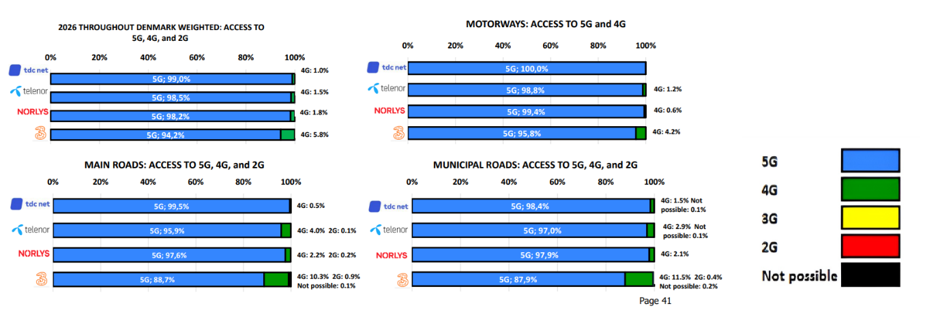
Figure 6: 5G Access Performance Across Motorways, Main Roads, and Municipal Roads in Denmark
Conclusion:
The Denmark nationwide mobile benchmarking study shows that large-scale mobile measurements do not have to depend on heavily manual drive testing workflows.
The most important takeaway from the methodology is clear: mobile measurements were carried out in an automatic and traffic-safe manner using the automatic RantCell app.
This matters because nationwide benchmarking requires consistency, repeatability, and scale. When routine measurement collection is automated, field teams can focus on completing routes safely, while engineering teams can focus on analysis, optimization, and decision-making.
The broader question for operators is simple: if a national benchmarking programme can be supported this way, how much traditional drive testing effort can now be reduced?
You may read the article here:
https://tdcnet.com/press/denmark-s-best-mobile-network-for-the-11th-year-in-a-row-stationary-and-on-the-move/
You may access the benchmarking report here:
https://tdcnet.com/media/qrap2obx/maaling-af-mobilnetvaerksoplevelse-rapport-30-04-2026_gb.pdf
To understand how RantCell can support nationwide benchmarking, automated drive testing, QoE monitoring, private LTE/5G validation, and large-scale smartphone-based testing workflows, request a demo here: https://rantcell.com/request-for-demo.html